
Table of Contents
Introduction
Medical imaging has revolutionised the way doctors diagnose and treat diseases. Two commonly discussed scans are the DOTA scan and the PET scan. While both involve advanced nuclear medicine techniques, they are not the same. Understanding the difference between a DOTA scan vs PET scan can help patients feel informed and confident before undergoing either procedure.
This guide explains in detail what each scan is, how they work, when they are recommended, and their benefits, so you can make informed healthcare decisions with your doctor.

What Is a PET Scan?
PET scan stands for Positron Emission Tomography scan. It is an advanced imaging test that uses a small amount of radioactive tracer to detect abnormalities in the body at the cellular level.
- Purpose: Detect metabolic changes in tissues before structural changes occur.
- Common Uses:
- Cancer detection, staging, and treatment monitoring
- Heart disease evaluation
- Brain disorders (e.g., Alzheimer’s, epilepsy)
- Cancer detection, staging, and treatment monitoring
- Tracer Used: Commonly FDG (Fluorodeoxyglucose)
How It Works:
- A radioactive tracer is injected into the bloodstream.
- The tracer travels to target organs or cells.
- The PET scanner detects gamma rays emitted from the tracer, creating detailed images of body function.
What Is a DOTA Scan?
A DOTA scan is a specialised type of PET scan used primarily to detect neuroendocrine tumours (NETs).
- Full Form: DOTA refers to DOTATATE or DOTATOC, which are molecules that bind to somatostatin receptors on certain tumour cells.
- Purpose: Specifically targets tumours with somatostatin receptors.
- Tracer Used: Gallium-68 DOTATATE or Gallium-68 DOTATOC.
How It Works:
- A radiolabelled DOTA compound is injected into the patient.
- It binds to somatostatin receptors present on certain tumours.
- PET/CT scanning captures high-contrast images showing tumour locations and spread.
DOTA Scan vs PET Scan – Key Differences
While both scans use PET technology, there are important differences in the tracer used, the target, and the clinical applications.
| Feature | PET Scan (FDG) | DOTA Scan (Ga-68 DOTATATE) |
| Main Purpose | Detects abnormal metabolism in various tissues | Detects neuroendocrine tumours with somatostatin receptors |
| Tracer Used | FDG (fluorodeoxyglucose) | Ga-68 DOTATATE or DOTATOC |
| Best For | Cancer, brain, heart diseases | Neuroendocrine tumours (NETs) |
| Specificity | General metabolic imaging | Highly specific to NETs |
| Preparation | Fasting 4–6 hours before | Similar fasting; sometimes additional instructions for NET patients |
| Scan Time | 20–45 minutes | 20–45 minutes |
When Doctors Recommend a PET Scan
A PET scan may be recommended for:
- Detecting cancer early
- Determining the extent (stage) of cancer
- Checking if treatment is working
- Evaluating brain disorders like Alzheimer’s
- Assessing heart muscle damage after a heart attack
When Doctors Recommend a DOTA Scan
A DOTA scan is usually ordered for:
- Diagnosing suspected neuroendocrine tumours
- Determining tumour spread (metastasis)
- Evaluating treatment response in NETs
- Locating small or hidden NETs not seen on other scans
Procedure – What Patients Can Expect
PET Scan Procedure
- Fasting for 4–6 hours.
- Injection of FDG tracer.
- Rest period to allow tracer distribution.
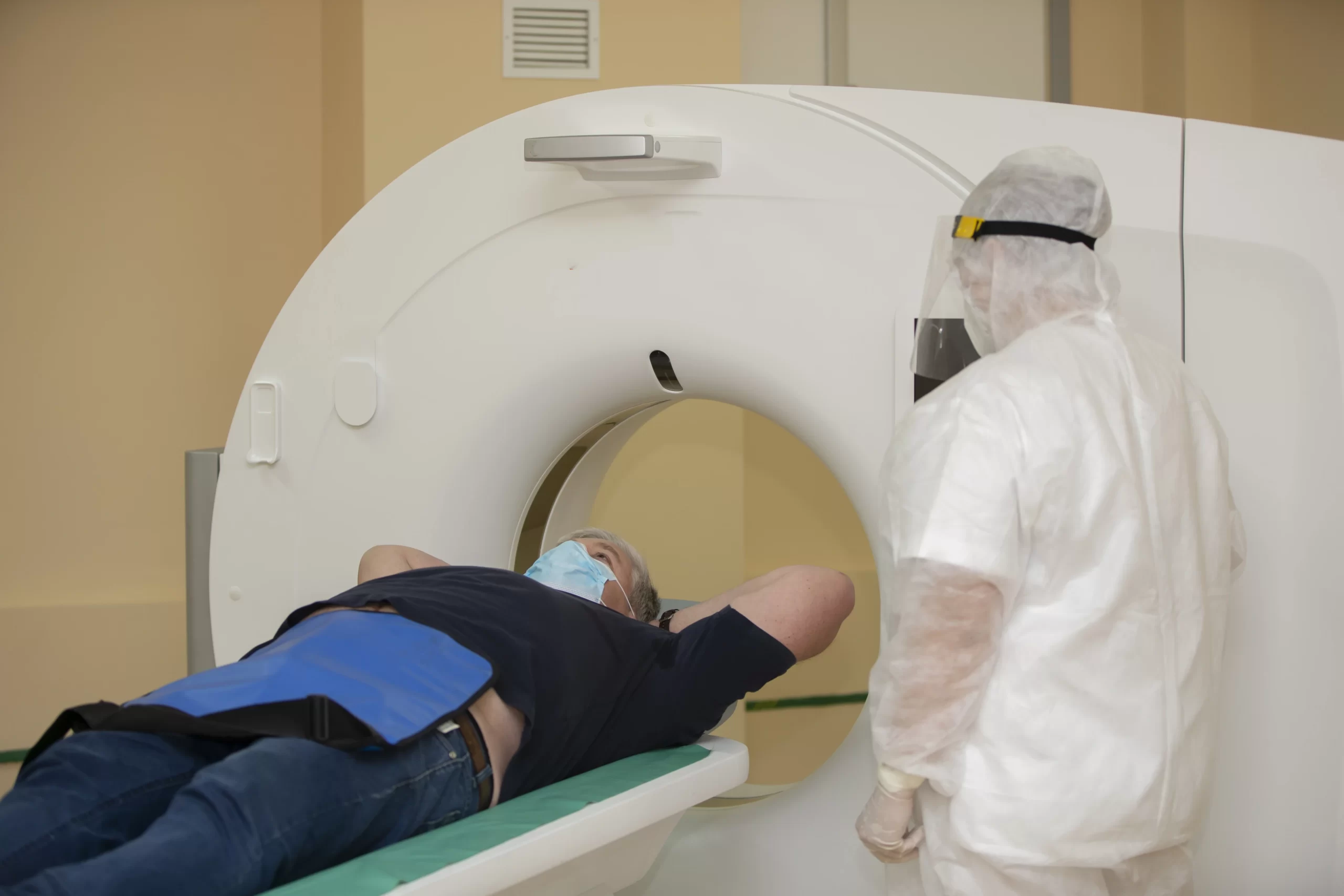
- Lying still inside the PET/CT scanner while images are taken.
DOTA Scan Procedure
- Similar fasting guidelines.
- Injection of Ga-68 DOTATATE tracer.
- Waiting period (usually 45–60 minutes) for tracer uptake.
- PET/CT scanning.
Advantages of PET Scan
- Detects disease at an early stage.
- Can assess how well treatment is working.
- Useful in multiple medical fields (oncology, neurology, cardiology).
Advantages of DOTA Scan
- High accuracy for detecting NETs.
- Can find tumours too small for conventional imaging.
- Guides targeted therapy decisions.
Limitations & Risks
PET Scan Limitations:
- False positives if inflammation is present.
- Limited use for tumours with low glucose metabolism.
DOTA Scan Limitations:
- Only useful for tumours with somatostatin receptors.
- Not for all cancer types.
Risks for Both:
- Small exposure to radiation.
- Rare allergic reactions to tracer.
- Mild discomfort at injection site.
Preparation Tips for Patients
- Follow fasting instructions carefully.
- Avoid strenuous exercise 24 hours before the scan.
- Inform your doctor about all medications and supplements.
- For diabetic patients: Special scheduling may be required.
DOTA Scan vs PET Scan – Choosing the Right Test
The decision depends on:
- Type of disease suspected
- Tumour biology
- Doctor’s assessment based on medical history and prior tests
Example:
If a doctor suspects lung cancer, a standard FDG PET scan may be chosen.
If a patient has symptoms suggestive of a neuroendocrine tumour, a DOTA scan is more accurate.
Cost & Availability
- PET Scan: More widely available; cost varies by hospital and region.
- DOTA Scan: Available in specialised imaging centres like Ace Imaging Centre; cost may be higher due to tracer specificity.
Why Choose Ace Imaging Centre for PET or DOTA Scans?
At Ace Imaging Centre, patients benefit from:
- State-of-the-art PET/CT scanners
- Experienced nuclear medicine specialists
- Accurate diagnosis for better treatment planning
- Comfortable and patient-friendly environment
Our team ensures every scan is performed with utmost care, accuracy, and safety.
Frequently Asked Questions
Q1: Is a DOTA scan the same as a PET scan?
No. A DOTA scan is a type of PET scan using a specific tracer for neuroendocrine tumours.
Q2: Which is more accurate – DOTA scan or PET scan?
Accuracy depends on the disease. For NETs, DOTA scans are superior. For general cancers, FDG PET scans are preferred.
Q3: Is the radiation exposure dangerous?
Both involve low radiation doses, generally considered safe under medical supervision.
Q4: Can I eat before the scan?
Fasting for 4–6 hours is usually required for both scans.
Q5: How long do results take?
Results are typically available within 24–48 hours.
Conclusion
While both scans use PET imaging technology, the DOTA scan vs PET scan debate is really about the right tool for the right job. A standard PET scan is versatile and used across many diseases, while a DOTA scan is highly specific for neuroendocrine tumours.
At Ace Imaging Centre, we ensure patients get the correct scan based on their unique condition, leading to more accurate diagnoses and better treatment outcomes.