
Introduction
When you’re scheduled for an MRI (Magnetic Resonance Imaging) scan, it’s natural to feel a little anxious or uncertain. Knowing the correct precautions before MRI can ensure both your safety and the success of the procedure. At Ace Imaging Centre, we prioritize your comfort and diagnostic accuracy. This in-depth guide explains the essential steps you need to take before undergoing an MRI scan.

Why Precautions Before MRI Matter
MRI is a powerful imaging technique that uses strong magnetic fields and radiofrequency (RF) pulses to create detailed images of the body’s internal structures. Unlike X-rays or CT scans, MRI does not use ionising radiation.
However, the strong magnetic field poses risks if proper precautions are not taken:
- Metallic objects can be pulled or displaced suddenly.
- Medical implants may malfunction or become unsafe.
- Image quality can be affected by metallic substances or movement.
- Thermal injuries can occur due to metal heating.
Therefore, observing proper precautions before MRI is crucial for both your safety and the quality of your diagnostic results.
Key Precautions Before MRI (Pre-Scan Checklist)
Below is a comprehensive checklist of actions you should take and information you should share before your MRI scan.
1. Complete the MRI Safety Questionnaire
Prior to your scan, you’ll be asked to complete a detailed MRI safety screening form. This form is critical and helps identify any risk factors. Typical questions include:
- Have you had any surgeries, especially those involving implants?
- Do you have any medical implants or devices?
- Do you have any metal fragments in your body or eyes?
- Are you pregnant or could be pregnant?
- Do you suffer from kidney issues?
- Do you experience claustrophobia or anxiety?
Honest and accurate answers help ensure that your scan is conducted safely.
2. Disclose Any Medical Implants or Devices
If you have any of the following, it’s vital to inform the MRI staff:
- Pacemakers or cardiac defibrillators
- Cochlear (ear) implants
- Neurostimulators or spinal cord stimulators
- Insulin or drug infusion pumps
- Prosthetic joints or metal rods
- Vascular stents, aneurysm clips, or coils
- Programmable shunts
- Metallic dental implants or braces
- Intrauterine devices (IUDs)
- Surgical clips or staples
- Cosmetic implants or metal-infused tattoos
- Metal shrapnel or bullet fragments
Many modern implants are MRI-safe under certain conditions. However, the radiology team must verify the safety guidelines for each specific device before proceeding.
3. Remove All External Metal Objects
Before entering the MRI room, all metal objects must be removed. These include:
- Jewelry (earrings, rings, necklaces, piercings)
- Watches and fitness trackers
- Hairpins, clips, and decorative items
- Eyeglasses, dentures, hearing aids
- Wallets, credit cards, coins, keys
- Clothing with metal parts (zippers, buttons, underwire bras)
- Makeup with metallic elements
- Adhesive patches with foil backing
Pro tip: Wear plain, metal-free cotton clothing to your appointment. If your clothing isn’t suitable, you’ll be asked to change into a hospital gown.
4. Follow Instructions for Contrast Scans
Some MRI scans require a gadolinium-based contrast agent to enhance image quality.
If contrast is required:
- You may be asked to fast for 4–6 hours before the scan.
- Hydration is usually encouraged, unless otherwise advised.
- A blood test may be needed to check your kidney function (especially if you have diabetes, high blood pressure, or known kidney issues).
Patients with impaired kidney function have a slightly increased risk of rare complications related to contrast, so safety measures are important.
5. Arrive Early and Use the Restroom
- Plan to arrive 20–30 minutes early to complete paperwork and screening.
- Use the restroom before your scan to avoid discomfort or delays during the procedure.
MRI scans typically last 20 to 60 minutes, and staying still throughout is crucial. Going to the bathroom beforehand ensures a smoother experience.
6. Manage Claustrophobia or Anxiety
If you experience claustrophobia or feel anxious in confined spaces:
- Inform the MRI centre when booking your appointment.
- Your doctor may prescribe a mild sedative to help you stay calm.
- Some centres offer open MRI or wide-bore machines for added comfort.
- Listening to music or guided breathing may also help you relax.
Important: If sedatives are used, you must bring someone with you to drive you home, as you won’t be allowed to drive afterward.
7. Discuss Pregnancy or Breastfeeding
If You Are Pregnant
- MRI without contrast is generally safe during pregnancy.
- However, contrast is usually avoided unless medically necessary.
- During the first trimester, non-urgent MRI scans may be postponed.
If You Are Breastfeeding
- Gadolinium contrast passes into breast milk in extremely small amounts.
- Breastfeeding can usually continue without interruption.
- If you prefer, you may express and discard milk for 24 hours after the scan.
Always inform your radiologist if you are pregnant or breastfeeding, so they can make the safest decision for you and your baby.
What to Expect During the MRI Scan
Understanding the process helps reduce anxiety. Here’s what typically happens:
| Step | Description | What You Should Do |
| Preparation | You’ll change into a gown and remove metal items | Follow all staff instructions |
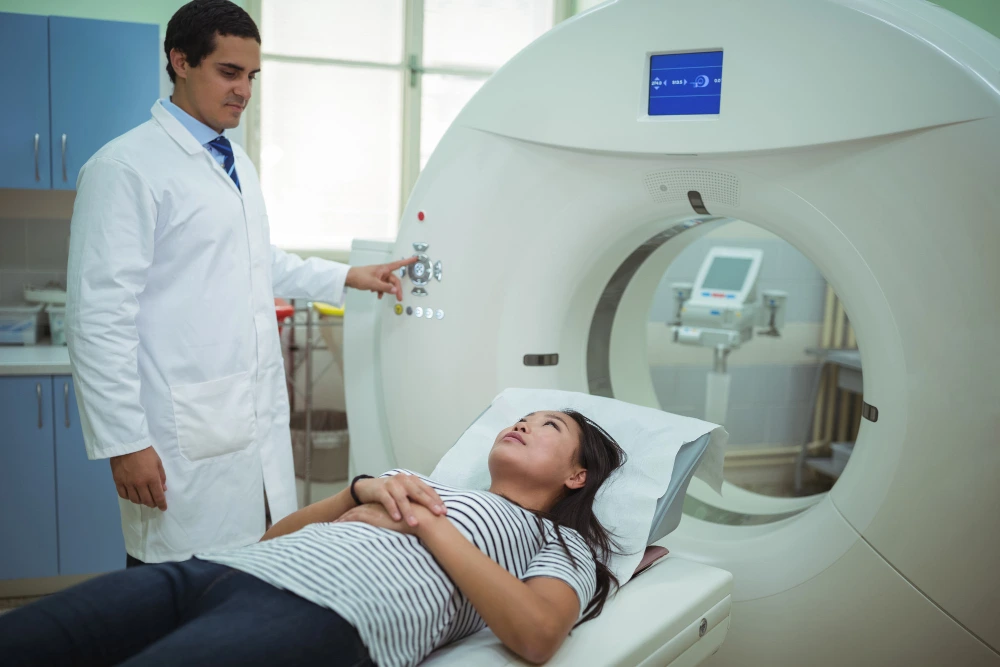
| Positioning | You’ll lie on a padded table with coils placed near the scan area | Try to stay relaxed and still |
| Communication | You’ll wear earplugs or headphones and get a call button | Use the button if you feel discomfort |
| Scanning | You’ll hear loud knocking or buzzing sounds | Stay still to avoid blurry images |
| Instructions | You may be asked to hold your breath for a few seconds | Follow breathing cues from the technician |
| Duration | Scans last 20–60 minutes depending on the area | Keep calm and still throughout the scan |
Special Considerations for Certain Conditions
Claustrophobia and Anxiety
- Mild to moderate anxiety is common and manageable.
- Sedation or anti-anxiety medication can help if prearranged.
- Ask your provider about open MRI options if you’re concerned.
Kidney Disease
- Patients with kidney problems may require lab tests before receiving contrast.
- The radiologist will assess risk vs. benefit to determine if contrast is appropriate.
Metal in the Eyes or Body
- Those with a history of metal work, especially involving the eyes, may require an X-ray to confirm it’s safe to proceed.
Common Myths About MRI Scans
“MRI uses harmful radiation.”
False – MRI uses magnetic fields and radio waves, not radiation like X-rays or CT scans.
“I can’t get an MRI because I have a tattoo.”
Not always true – Most tattoos are safe. Some may cause mild heating or irritation, but risks are very low.
“All metal implants mean I can’t have an MRI.”
Not true – Many implants are MRI-compatible. It’s crucial to check each device’s safety status before scanning.
“I have to stop breastfeeding if I get contrast.”
Not usually – Gadolinium passes into breast milk in tiny amounts. Most professionals agree that breastfeeding can continue safely.
Summary: Your MRI Preparation Checklist
Before heading in for your MRI, remember these key precautions before MRI:
Complete the MRI safety questionnaire accurately
Disclose all implants, surgeries, or foreign bodies
Remove all external metal items
Follow fasting and hydration instructions if required
Arrive early and use the restroom
Inform staff of claustrophobia or anxiety
Tell your doctor if you’re pregnant or breastfeeding
Stay still and follow instructions during the scan
Final Thoughts
At Ace Imaging Centre, we are committed to providing you with a safe and comfortable MRI experience. Following the right precautions before MRI ensures the procedure is effective, safe, and stress-free. Our trained staff are always here to guide you and answer any questions you may have.
If you have upcoming MRI appointments or specific concerns, feel free to contact us. Your health, safety, and peace of mind are our top priorities.