
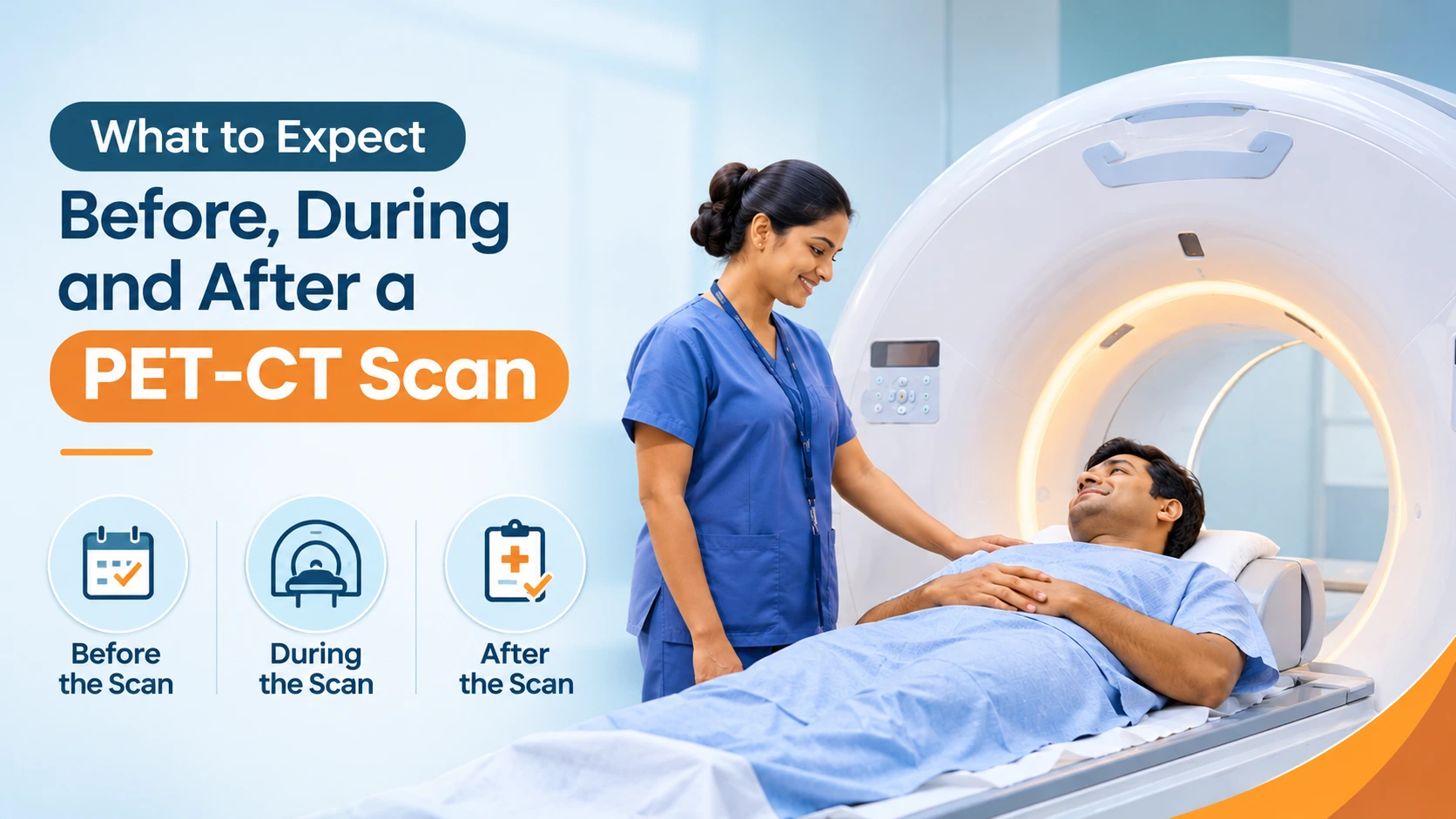
A PET-CT scan is an advanced medical imaging test that helps doctors understand how different tissues and organs function and identify abnormal changes within the body. It combines two imaging technologies: Positron Emission Tomography (PET) and Computed Tomography (CT). While the PET scan provides information about metabolic activity, the CT scan produces detailed anatomical images of internal structures. Together, these technologies help doctors evaluate various medical conditions, particularly cancer, neurological disorders and certain heart diseases.
If your doctor has recommended a PET-CT scan, it is natural to have questions about the procedure. You may wonder how to prepare, whether the scan is painful, how long it takes and what happens after the examination.
Understanding the process can help you feel more comfortable and prepared for your appointment. This guide explains what to expect before, during and after a PET-CT scan, along with important preparation instructions and safety precautions.
What Is a PET-CT Scan and Why Is It Recommended?
A PET-CT scan is a diagnostic imaging procedure that combines functional and anatomical imaging to provide detailed information about the body.
Before the examination, a small amount of radioactive tracer, commonly a glucose-based substance called Fluorodeoxyglucose (FDG), is administered through an intravenous injection. This tracer travels through the bloodstream and accumulates in tissues according to their metabolic activity.
Since many cancer cells use glucose at a higher rate than normal cells, they may absorb more of the tracer and appear as areas of increased activity on PET images. However, inflammation, infection and certain normal body processes can also cause increased tracer uptake. Therefore, PET-CT findings must always be interpreted alongside medical history and other investigations.
Doctors may recommend a PET-CT scan for:
- Detecting and evaluating certain types of cancer.
- Determining the stage of cancer.
- Identifying whether cancer has spread to other parts of the body.
- Assessing how well a patient is responding to chemotherapy, radiation therapy or other treatments.
- Detecting possible cancer recurrence.
- Evaluating selected neurological conditions, including certain types of epilepsy and dementia.
- Assessing heart muscle viability in specific cardiac conditions.
The exact reason for the examination depends on your symptoms, medical history and your doctor’s recommendation.
1. Before a PET-CT Scan: How Should You Prepare?
Proper preparation is essential for obtaining accurate PET-CT scan results. Certain foods, medications and physical activities can affect how the radioactive tracer is distributed throughout the body.
Your imaging centre will provide specific instructions depending on the type of PET-CT examination being performed.
Follow Fasting Instructions
For most FDG PET-CT scans, patients are asked to avoid eating for approximately 4–6 hours before the appointment. Plain water is generally permitted and encouraged unless your imaging centre provides different instructions.
Fasting helps maintain stable blood glucose and insulin levels, allowing the radioactive tracer to distribute more effectively.
During the fasting period, avoid:
- Solid foods and snacks.
- Sugary beverages and fruit juices.
- Tea and coffee, particularly with milk or sugar.
- Chewing gum and sweets.
- Any food or drink that contains calories.
Do not stop prescribed medications unless specifically instructed by your doctor or imaging centre.
Inform Your Doctor About Medical Conditions
Before scheduling your PET-CT scan, inform the medical team if you have any of the following:
- Diabetes or high blood sugar levels.
- Kidney-related conditions.
- Recent infections or fever.
- Recent surgery or medical procedures.
- Pregnancy or a possibility of pregnancy.
- Breastfeeding.
- Known allergies or previous reactions to contrast agents.
Patients with diabetes may require special fasting and medication instructions to maintain appropriate blood glucose levels before the examination.
Avoid Strenuous Physical Activity
Avoid intense exercise, heavy workouts and strenuous physical activities for approximately 24 hours before an FDG PET-CT scan, or as advised by your imaging centre.
Exercise can increase glucose uptake in muscles, potentially affecting image quality and interpretation.
Light routine activities may generally be continued unless your doctor advises otherwise.
Wear Comfortable Clothing
Choose loose-fitting and comfortable clothing without metal components such as zippers, hooks or metallic buttons.
You may be asked to remove:
- Jewellery and watches.
- Belts and metallic accessories.
- Hearing aids, if required.
- Other objects that may interfere with imaging.
Depending on the examination, the imaging centre may provide a hospital gown.
Carry Your Medical Documents
Bring all relevant medical records to your appointment, including:
- Doctor’s prescription and referral.
- Previous PET-CT, CT or MRI scan reports.
- Recent blood investigation reports.
- Biopsy or histopathology reports, if applicable.
- Details of ongoing medications.
- Previous treatment records, particularly if the scan is being performed to assess treatment response.
These documents help the radiologist compare previous findings and interpret the current examination more accurately.
2. During a PET-CT Scan: What Happens During the Procedure?
A PET-CT scan is generally a painless and non-invasive imaging procedure. The most noticeable part for many patients is the initial injection of the radioactive tracer.
The examination involves several steps.
Step 1: Registration and Initial Assessment
When you arrive at the imaging centre, the staff will verify your details and review your medical history.
The imaging team may check your blood glucose levels, particularly if you are undergoing an FDG PET-CT scan.
You will also be asked about fasting, recent physical activity, medications and any relevant medical conditions.
Step 2: Administration of the Radioactive Tracer
A small amount of radioactive tracer is administered through an intravenous injection, usually into a vein in your arm.
The tracer is commonly FDG, a glucose-based radioactive substance used to assess metabolic activity in different tissues.
You may experience a slight pinching sensation during the injection, similar to a routine blood test. The injection itself is generally well tolerated.
Step 3: Waiting Period for Tracer Distribution
After the injection, you will usually rest quietly for approximately 45–60 minutes while the tracer circulates throughout your body.
During this period, you may be asked to:
- Remain relaxed and avoid unnecessary movement.
- Avoid talking excessively.
- Keep physical activity to a minimum.
- Avoid reading or using your phone if instructed.
- Remain comfortably seated or lying down.
This waiting period allows the tracer to distribute through the body and accumulate in tissues according to their metabolic activity.
Following these instructions helps reduce unwanted muscular activity and improves image quality.
Step 4: Positioning Inside the PET-CT Scanner
Once the waiting period is complete, you will be taken to the scanning room.
You will lie on a narrow, cushioned examination table that moves slowly through the PET-CT scanner.
The radiographer will position you appropriately to ensure the required body region is covered.
Depending on the examination, your arms may be positioned above your head or alongside your body.
It is important to remain as still as possible throughout the scan to avoid blurred images.
Step 5: Image Acquisition
The scanning table moves through the scanner while the PET and CT systems capture images of your body.
The CT component provides detailed anatomical information, while the PET component identifies areas of increased or decreased metabolic activity.
During the examination:
- You will not feel the scanner taking images.
- You may hear some mechanical sounds from the equipment.
- The radiographer will monitor you from an adjacent control room.
- You may be asked to hold your breath briefly for certain image sequences.
- You can communicate with the imaging team through an intercom if needed.
The actual image acquisition may take approximately 20–40 minutes, depending on the scan protocol and body coverage.
How Long Does a PET-CT Scan Take?
The overall appointment usually takes approximately 2–3 hours, although the duration can vary depending on the examination and preparation requirements.
|
Stage |
Approximate Duration |
|
Registration and initial assessment |
10–15 minutes |
|
Radioactive tracer injection |
5–10 minutes |
|
Tracer uptake period |
45–60 minutes |
|
Image acquisition |
20–40 minutes |
|
Total appointment |
2–3 hours |
These timings are approximate. Certain specialised PET-CT examinations may require additional preparation or scanning time.
3. After a PET-CT Scan: What Should You Expect?
Once the scanning procedure is complete, the radiographer will check whether the required images have been captured properly.
In most cases, patients can leave the imaging centre shortly after the examination and return to their regular activities, unless specific medical instructions have been provided.
Here are some important things to know after your PET-CT scan.
Drink Plenty of Water
You will generally be encouraged to drink plenty of water after the examination.
Adequate hydration helps your body eliminate the radioactive tracer through urine.
You may also be advised to empty your bladder regularly after the scan.
Follow Radiation Safety Precautions
The radioactive tracer used during a PET-CT scan has a short half-life and gradually loses its radioactivity.
However, certain precautions may be recommended for a few hours after the examination.
Depending on the tracer and your individual circumstances, these may include:
- Avoiding prolonged close contact with pregnant women.
- Limiting extended close contact with infants and young children.
- Following the imaging centre’s instructions regarding breastfeeding.
- Maintaining good hygiene after using the toilet.
- Washing your hands thoroughly.
Your imaging centre will provide specific guidance based on the tracer administered and your examination.
Can You Eat Normally After a PET-CT Scan?
In most cases, you can resume your normal eating and drinking habits after the scan.
If you were fasting before the examination, you can generally have a meal once the procedure is complete.
Patients with diabetes should follow their doctor’s instructions regarding resuming their usual medication and meal schedule.
Are There Any Side Effects After a PET-CT Scan?
Most patients tolerate PET-CT scans well and do not experience significant side effects.
The radioactive tracer is administered in a small quantity and generally does not cause noticeable symptoms.
Occasionally, patients may experience:
- Mild discomfort or bruising at the injection site.
- Temporary discomfort associated with an intravenous line.
- Rare allergic reactions, particularly if contrast material is used.
It is important to understand that the radioactive tracer and CT contrast material are different substances. If contrast is administered, additional precautions may be necessary.
Contact your healthcare provider if you experience unusual symptoms after the examination.
4. Is a PET-CT Scan Safe?
PET-CT scans are widely used diagnostic procedures when medically indicated. However, like other imaging examinations involving radiation, they carry some radiation exposure.
The examination involves two sources of radiation:
- PET scan: Uses a small amount of radioactive tracer to evaluate metabolic activity.
- CT scan: Uses X-rays to produce detailed anatomical images.
The radiation dose depends on the type of tracer, the CT scanning protocol and the patient’s individual requirements.
Doctors recommend PET-CT scans when the expected diagnostic benefits outweigh the potential risks.
Certain precautions are necessary for pregnant women and breastfeeding mothers. Always inform your doctor and imaging team about pregnancy or breastfeeding before the examination.
5. When Will You Receive Your PET-CT Scan Report?
After the examination, the captured images are reviewed by a qualified radiologist or nuclear medicine specialist.
The specialist evaluates the images, identifies areas of abnormal tracer uptake and correlates the findings with the patient’s clinical history and previous investigations.
The report may include:
- Areas showing increased or decreased metabolic activity.
- Findings related to the primary disease.
- Possible involvement of lymph nodes or other organs.
- Comparison with previous imaging studies, where available.
- An overall interpretation to help guide further medical management.
The reporting time varies depending on the complexity of the examination and the imaging centre’s workflow.
Your treating doctor will explain the findings and discuss whether further investigations or treatment adjustments are required.
It is important to remember that increased tracer uptake does not automatically indicate cancer. Inflammation, infection and other conditions can produce similar findings. Therefore, the report should always be interpreted in the context of your complete medical history.
6. Important Things to Remember Before Your PET-CT Appointment
To make your examination smoother and help obtain reliable imaging results, keep the following checklist in mind.
|
Before the Scan |
During the Scan |
After the Scan |
|
Follow fasting instructions |
Remain relaxed |
Drink adequate water |
|
Avoid strenuous exercise |
Stay as still as possible |
Empty your bladder regularly |
|
Inform the team about diabetes |
Follow radiographer instructions |
Follow radiation safety advice |
|
Share pregnancy or breastfeeding information |
Communicate any discomfort |
Resume meals as advised |
|
Carry previous reports |
Avoid unnecessary movement |
Consult your doctor about results |
Following these instructions can help the imaging team obtain good-quality images and provide your doctor with useful diagnostic information.
Frequently Asked Questions About PET-CT Scans
1. Is a PET-CT scan painful?
No. A PET-CT scan is generally painless. You may experience slight discomfort when the radioactive tracer is injected through an intravenous line, but the scanning process itself does not cause pain.
2. How long does a PET-CT scan take?
The complete appointment generally takes around 2–3 hours. This includes registration, tracer injection, the uptake period and image acquisition. The actual scanning time is usually around 20–40 minutes.
3. Can I eat before a PET-CT scan?
For most FDG PET-CT examinations, patients are advised to fast for approximately 4–6 hours before the appointment. Plain water is generally permitted. Always follow the specific instructions provided by your imaging centre.
4. Can I drive after a PET-CT scan?
Most patients can drive after a routine PET-CT scan because the procedure generally does not involve sedation. However, if you have received medication that affects alertness or have another medical condition, follow your doctor’s advice.
5. Does a PET-CT scan detect cancer?
A PET-CT scan can help identify areas of abnormal metabolic activity that may be associated with cancer. It is also used for cancer staging, treatment response assessment and detecting possible recurrence. However, not every abnormal finding indicates cancer, and additional investigations may sometimes be required.
6. Are there any dietary restrictions after a PET-CT scan?
Most patients can resume their normal diet after the examination. Patients with diabetes or other medical conditions should follow their doctor’s instructions regarding meals and medications.
7. Can I be around my family after a PET-CT scan?
In most cases, normal interaction is permitted. However, temporary precautions involving prolonged close contact with pregnant women, infants and young children may be recommended. Follow the instructions provided by your imaging centre.
8. When will I receive my PET-CT scan results?
The reporting time depends on the complexity of the examination and the imaging centre. Once the radiologist or nuclear medicine specialist has reviewed the images, the report is shared for your treating doctor’s evaluation.
Get Accurate Diagnostic Imaging at Ace Imaging Center
A PET-CT scan plays an important role in modern diagnostic imaging by providing detailed information about metabolic activity and anatomical structures within the body. From cancer evaluation and treatment monitoring to selected neurological and cardiac investigations, it helps doctors make more informed clinical decisions.
Knowing what to expect before, during and after a PET-CT scan can make the experience less stressful and help you prepare appropriately. Following fasting instructions, sharing your medical history and adhering to post-scan precautions are important steps towards a smooth examination.
At Ace Imaging Center, patients can access diagnostic imaging services with an emphasis on appropriate imaging protocols, patient comfort and reliable reporting. If your doctor has recommended a PET-CT scan, consult the imaging centre for appointment details and specific preparation instructions.
Book your PET-CT scan at Ace Imaging Center and follow your doctor’s recommendations for timely and appropriate diagnostic evaluation.
Name: Ace Imaging Center
Address: Bezolla Complex, 102, VN Purav Marg, Swastik Park, Chembur, Mumbai, Maharashtra 400071
contact: 081693 60334