
If your doctor has recommended an MRI, one of the first questions you may have is: “What is the MRI scan cost?” The answer depends on several factors, including the part of the body being examined, the type of MRI prescribed, whether contrast is required, the imaging protocol used, and the diagnostic centre where the scan is performed.
MRI, or Magnetic Resonance Imaging, is an advanced diagnostic imaging technique that uses a strong magnetic field and radio waves to produce detailed images of organs, tissues, joints and other structures inside the body. Unlike X-rays and CT scans, MRI does not use ionising radiation.
Because different MRI examinations require different imaging sequences and levels of expertise, there is no single fixed price for every MRI scan. Understanding what influences the cost can help you compare prices more meaningfully and prepare for your examination.
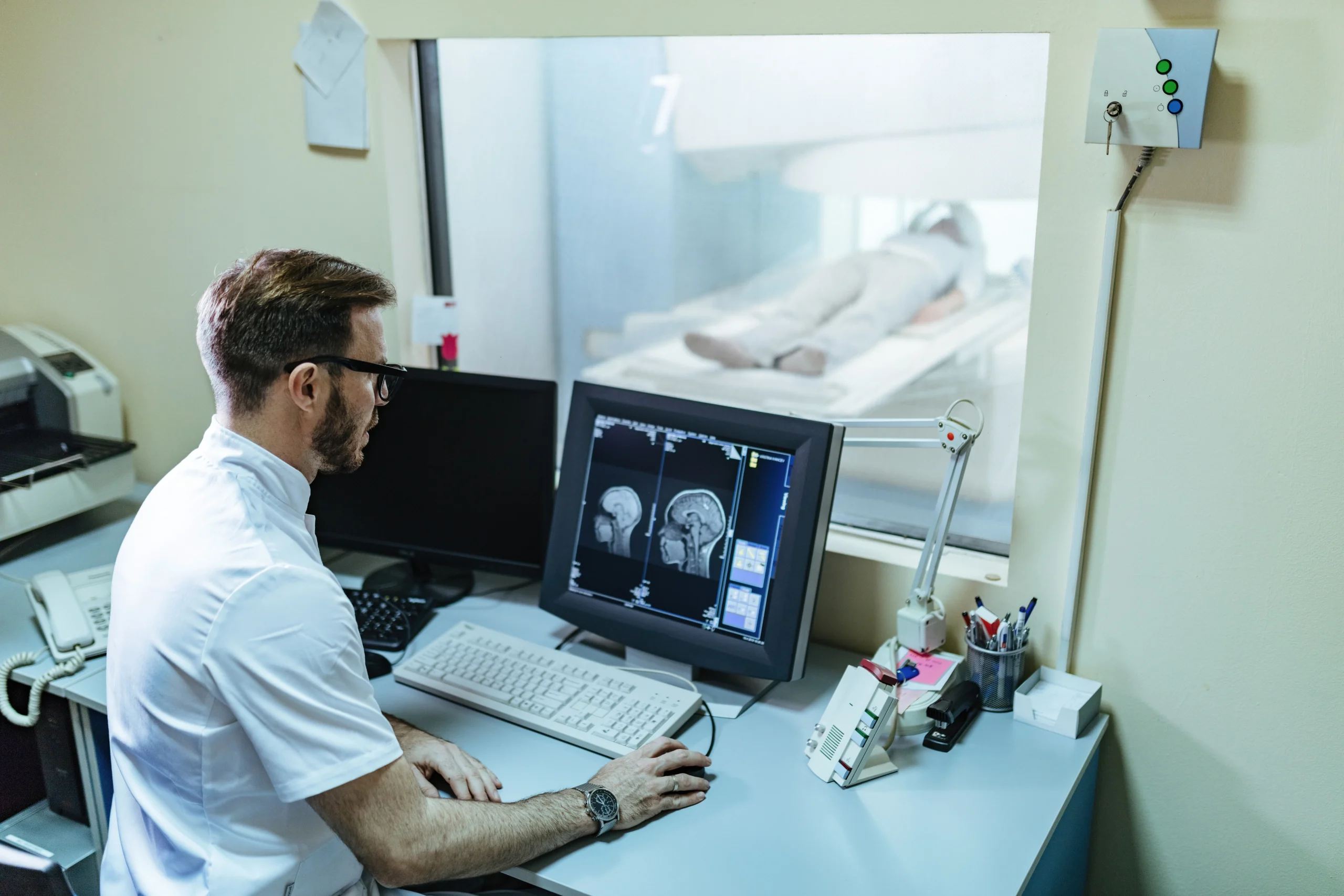
MRI Scan Cost: Complete Guide to MRI Prices, Types, Preparation and What to Expect
If your doctor has recommended an MRI, one of the first questions you may have is: “What is the MRI scan cost?” The answer depends on several factors, including the part of the body being examined, the type of MRI prescribed, whether contrast is required, the imaging protocol used, and the diagnostic centre where the scan is performed.
MRI, or Magnetic Resonance Imaging, is an advanced diagnostic imaging technique that uses a strong magnetic field and radio waves to produce detailed images of organs, tissues, joints and other structures inside the body. Unlike X-rays and CT scans, MRI does not use ionising radiation.
Because different MRI examinations require different imaging sequences and levels of expertise, there is no single fixed price for every MRI scan. Understanding what influences the cost can help you compare prices more meaningfully and prepare for your examination.
What Is the MRI Scan Cost in India?
The MRI scan cost varies depending on the type of examination and the diagnostic facility. In Mumbai, for example, currently listed prices for different MRI examinations show considerable variation. One current listing shows MRI brain starting around ₹2,813, while a right-knee MRI is listed from approximately ₹3,152 and a whole-spine MRI from around ₹6,062. Contrast-enhanced examinations can cost more; a whole-spine MRI with contrast is currently listed from approximately ₹9,200.
These figures are examples rather than a universal price list. The actual amount payable at a particular imaging centre may be different.
Factors that can affect MRI scan cost include:
- Body part being examined
- Type of MRI protocol required
- Single-region or multiple-region scan
- MRI with or without contrast
- Use of specialised imaging techniques
- Strength and capabilities of the MRI equipment
- Radiologist reporting and expertise
- Location of the diagnostic centre
- Whether additional sequences are required
- Whether sedation or special assistance is needed
Therefore, it is better to ask the imaging centre for the exact cost of the specific MRI prescribed by your doctor rather than relying on a general MRI price.
MRI Scan Cost by Type of Examination
The cost of an MRI depends substantially on the body part being scanned. A routine MRI of one region may cost less than a scan covering multiple regions or a specialised contrast-enhanced examination.
| MRI Examination | What It Evaluates | Cost Consideration |
| MRI Brain | Brain tissue, blood vessels and surrounding structures | Depends on protocol and whether contrast is required |
| MRI Spine | Cervical, dorsal or lumbar spine | Cost varies by region and whether one or multiple regions are scanned |
| Whole Spine MRI | Cervical, dorsal and lumbar spine | Usually more extensive than a single-region spine MRI |
| MRI Knee | Ligaments, cartilage, tendons, muscles and joint structures | Depends on whether one or both knees are examined |
| MRI Shoulder | Rotator cuff, cartilage, muscles and joint structures | Varies by protocol |
| MRI Abdomen | Abdominal organs and soft tissues | May require specialised protocols or contrast |
| MRI Pelvis | Pelvic organs and surrounding structures | Cost varies depending on the clinical indication |
| MRI Brain with Contrast | Enhanced evaluation of selected brain structures | Usually costs more than a non-contrast study |
| MRI Whole Spine with Contrast | Detailed evaluation of the entire spine with contrast | Generally higher than routine whole-spine MRI |
The MRI examination should be selected based on the clinical question your doctor is trying to answer. A more expensive scan is not necessarily more appropriate unless it has been specifically indicated.
What Factors Affect MRI Scan Cost?
1. Body Part Being Scanned
The area of the body being examined is one of the most important factors affecting MRI pricing.
For example, an MRI of a single joint is different from a whole-spine MRI. The latter covers multiple spinal regions and may involve a longer examination and additional imaging sequences.
2. MRI With or Without Contrast
Some MRI examinations are performed without contrast, while others may require a contrast-enhanced MRI.
MRI contrast commonly uses a gadolinium-based contrast agent. It can make certain tissues, blood vessels or abnormalities more clearly visible and may provide additional diagnostic information.
Because contrast involves additional material, administration and monitoring, an MRI with contrast may cost more than a routine non-contrast examination.
However, contrast is not required for every MRI. Whether it is appropriate depends on the body part, suspected condition and clinical question.
3. Number of Regions Scanned
An MRI may be prescribed for one specific region or multiple regions.
For example:
- Cervical spine MRI
- Lumbar spine MRI
- Cervical and lumbar spine MRI
- Whole-spine MRI
Scanning more than one region generally involves a more extensive examination and can affect the total cost.
4. Specialised MRI Protocols
Certain medical conditions require specialised MRI protocols or additional sequences. These may provide more detailed information for specific diagnostic questions.
The final MRI protocol should be determined by the referring doctor and radiology team based on the patient’s clinical requirements.
5. Diagnostic Centre and Equipment
MRI costs can differ between imaging centres because of differences in equipment, technology, staffing, reporting expertise, location and operating costs.
When comparing MRI prices, patients should therefore consider what is included in the quoted price, rather than comparing only the headline number.
What Is Included in the MRI Scan Cost?
Before booking an MRI, it is useful to confirm what the quoted price includes.
Depending on the centre and examination, the fee may cover:
- MRI scanning
- Technologist/radiographer assistance
- Image processing
- Radiologist interpretation
- Diagnostic report
- Contrast administration, if applicable
- Digital images or image access
Additional charges may apply for certain services or specialised procedures.
If you are comparing two centres, ask whether the quoted amount is the complete examination cost or whether additional charges may be added.
MRI With Contrast vs MRI Without Contrast
One common reason for differences in MRI scan cost is whether contrast is required.
MRI without contrast
A non-contrast MRI can provide detailed images of many organs, joints and soft tissues. Many routine MRI examinations can be performed without contrast.
MRI with contrast
In selected cases, a contrast agent may be administered through a vein to make particular tissues or abnormalities easier to distinguish.
Contrast may be considered for certain examinations involving:
- Tumours or suspected abnormal growths
- Inflammation
- Certain infections
- Blood vessels
- Post-treatment evaluation
- Specific neurological conditions
- Selected abdominal or pelvic conditions
The decision should be based on the medical indication and the radiologist’s or referring doctor’s recommendation—not simply on the cost of the examination.
Patients should tell the imaging team about kidney problems, previous reactions to contrast agents, allergies and other relevant medical conditions.
Why Is MRI More Expensive Than Some Other Imaging Tests?
MRI uses sophisticated technology to create detailed images of soft tissues and internal structures. The examination can require specialised protocols, trained MRI technologists, radiologist interpretation and relatively longer scanning times.
MRI is particularly useful for evaluating structures such as the brain, spinal cord, muscles, ligaments, cartilage and other soft tissues. It does not use ionising radiation.
However, the appropriate imaging test depends on the medical condition. Your doctor may recommend an X-ray, ultrasound, CT scan, MRI or another examination depending on the information needed.
How Long Does an MRI Scan Take?
The duration depends on the type of MRI being performed.
A routine MRI may take approximately 15 minutes to an hour, although some examinations can take longer.
The total appointment time can also include:
- Registration
- MRI safety screening
- Changing clothes, if required
- Removal of metallic objects
- Contrast preparation, if needed
- Positioning on the scanner
- The MRI examination
- Post-scan procedures, when applicable
Patients should allow sufficient time for the complete appointment rather than planning around the scanning time alone.
How Should You Prepare for an MRI Scan?
Preparation depends on the specific examination.
In many cases, patients can continue their normal food, drinks and medicines unless they receive different instructions from their doctor or imaging centre. Some specialised examinations may require fasting or other preparation.
Before your MRI:
- Follow the preparation instructions provided by the imaging centre.
- Inform staff about any implants or medical devices.
- Tell the MRI team if you have had a previous reaction to contrast.
- Inform the centre if you have kidney disease or kidney failure.
- Tell the staff if you are pregnant or may be pregnant.
- Remove jewellery, watches and other metallic objects.
- Follow instructions regarding food, drink and medicines.
- Inform the team if you experience claustrophobia or anxiety.
Certain implants and electronic devices may require additional safety assessment before an MRI.
Is an MRI Scan Safe?
MRI is considered a safe diagnostic imaging method for most eligible patients and does not use ionising radiation. However, the powerful magnetic field means that MRI safety screening is essential.
Some implants, devices or metallic objects can create safety risks or interfere with image quality. Patients should always provide complete information about implants, previous surgeries and metallic fragments before entering the MRI room.
MRI contrast safety
When contrast is necessary, the radiology team evaluates whether it is appropriate for the individual patient.
Patients with significant kidney disease may require additional assessment before receiving gadolinium-based contrast. Allergic reactions can occur but serious reactions are uncommon.
What Should You Ask Before Booking an MRI?
If you are comparing MRI scan costs at different diagnostic centres, asking a few simple questions can help you understand the actual price.
Ask the imaging centre:
- What is the cost of the exact MRI prescribed by my doctor?
- Is the MRI with or without contrast?
- Is contrast included in the quoted price?
- Is the radiologist’s report included?
- Are there any additional charges?
- When will the report be available?
- Will I receive digital images?
- Do I need to fast before the examination?
- Do I need any blood tests before a contrast MRI?
- What documents or previous reports should I bring?
This can prevent unexpected expenses and help you compare services more accurately.
MRI Scan Cost: Why the Cheapest Option May Not Be the Only Consideration
Cost is understandably important when planning a medical examination. However, an MRI is a diagnostic procedure, and the usefulness of the examination depends on obtaining appropriate images and an accurate interpretation.
When selecting an imaging centre, consider:
- Appropriate MRI protocol
- Qualified and experienced radiology professionals
- Patient safety procedures
- Equipment and technology
- Image quality
- Reporting process
- Clear communication
- Availability of reports and images
- Transparent pricing
The goal should be to obtain the examination that is appropriate for your doctor’s clinical question while maintaining safety and diagnostic quality.
Frequently Asked Questions About MRI Scan Cost
What is the average MRI scan cost?
There is no single average price applicable to every MRI examination. The cost varies according to the body part, type of scan, contrast requirement, number of regions and diagnostic centre. Current Mumbai listings demonstrate this variation across different MRI examinations.
Is MRI with contrast more expensive?
Usually, an MRI with contrast can cost more because it involves contrast material and its administration. However, the additional cost varies by examination and imaging centre.
Does every MRI require contrast?
No. Many MRI examinations are performed without contrast. Contrast is used when it is expected to provide additional diagnostic information.
Is MRI painful?
MRI is generally a non-invasive and painless examination. You will need to remain still while images are acquired. The scanner can produce loud knocking or tapping sounds, so hearing protection is generally provided.
How long does an MRI take?
Many MRI examinations take around 15 minutes to one hour, although the duration can vary depending on the examination and protocol.
Can I eat before an MRI?
For many routine MRI examinations, normal eating and drinking may be allowed. However, some examinations have specific preparation requirements. Always follow the instructions provided for your particular scan.
Can I have an MRI if I have a metal implant?
It depends on the type of implant. Some implants are MRI-compatible under specific conditions, while others may present safety concerns. Always inform the MRI team about any implant or metallic object before the examination.
Is MRI safer than CT?
MRI and CT use different technologies and have different clinical applications. MRI does not use ionising radiation, while CT uses X-rays. The appropriate examination depends on the condition being evaluated and the information your doctor needs.
Book an MRI Scan at Ace Imaging Centre
If your doctor has recommended an MRI, understanding the MRI scan cost is only one part of choosing an imaging centre. The type of examination, appropriate protocol, patient safety, image quality and professional reporting are also important considerations.
At Ace Imaging Centre, patients can discuss their prescribed MRI examination and understand the relevant preparation and pricing before the scan. For an accurate quotation, contact the centre with your doctor’s prescription and details of the MRI examination required.
Looking for an MRI scan in Mumbai? Contact Ace Imaging Centre to enquire about the MRI examination recommended by your doctor and its current cost.
Medical Disclaimer
This article is intended for general informational purposes only and should not be considered a substitute for medical advice, diagnosis or treatment. MRI type, contrast requirements and preparation should be determined by a qualified healthcare professional based on the patient’s individual medical condition. MRI prices may change and can vary between examinations and diagnostic centres. Please confirm the current price and preparation instructions with Ace Imaging Centre before booking.
Name: Ace Imaging Center
Address: Bezolla Complex, 102, VN Purav Marg, Swastik Park, Chembur, Mumbai, Maharashtra 400071
contact: 081693 60334