MRI Scan Cost

MRI Scan Cost: Complete Guide to MRI Prices, Types, Preparation and What to Expect

If your doctor has recommended an MRI, one of the first questions you may have is: “What is the MRI scan cost?” The answer depends on several factors, including the part of the body being examined, the type of MRI prescribed, whether contrast is required, the imaging protocol used, and the diagnostic centre where the scan is performed.

MRI, or Magnetic Resonance Imaging, is an advanced diagnostic imaging technique that uses a strong magnetic field and radio waves to produce detailed images of organs, tissues, joints and other structures inside the body. Unlike X-rays and CT scans, MRI does not use ionising radiation.

Because different MRI examinations require different imaging sequences and levels of expertise, there is no single fixed price for every MRI scan. Understanding what influences the cost can help you compare prices more meaningfully and prepare for your examination.
MRI Scan Cost

MRI Scan Cost: Complete Guide to MRI Prices, Types, Preparation and What to Expect

If your doctor has recommended an MRI, one of the first questions you may have is: “What is the MRI scan cost?” The answer depends on several factors, including the part of the body being examined, the type of MRI prescribed, whether contrast is required, the imaging protocol used, and the diagnostic centre where the scan is performed.

MRI, or Magnetic Resonance Imaging, is an advanced diagnostic imaging technique that uses a strong magnetic field and radio waves to produce detailed images of organs, tissues, joints and other structures inside the body. Unlike X-rays and CT scans, MRI does not use ionising radiation.

Because different MRI examinations require different imaging sequences and levels of expertise, there is no single fixed price for every MRI scan. Understanding what influences the cost can help you compare prices more meaningfully and prepare for your examination.

What Is the MRI Scan Cost in India?

The MRI scan cost varies depending on the type of examination and the diagnostic facility. In Mumbai, for example, currently listed prices for different MRI examinations show considerable variation. One current listing shows MRI brain starting around ₹2,813, while a right-knee MRI is listed from approximately ₹3,152 and a whole-spine MRI from around ₹6,062. Contrast-enhanced examinations can cost more; a whole-spine MRI with contrast is currently listed from approximately ₹9,200.

These figures are examples rather than a universal price list. The actual amount payable at a particular imaging centre may be different.

Factors that can affect MRI scan cost include:

  • Body part being examined
  • Type of MRI protocol required
  • Single-region or multiple-region scan
  • MRI with or without contrast
  • Use of specialised imaging techniques
  • Strength and capabilities of the MRI equipment
  • Radiologist reporting and expertise
  • Location of the diagnostic centre
  • Whether additional sequences are required
  • Whether sedation or special assistance is needed

Therefore, it is better to ask the imaging centre for the exact cost of the specific MRI prescribed by your doctor rather than relying on a general MRI price.

MRI Scan Cost by Type of Examination

The cost of an MRI depends substantially on the body part being scanned. A routine MRI of one region may cost less than a scan covering multiple regions or a specialised contrast-enhanced examination.

MRI Examination What It Evaluates Cost Consideration
MRI Brain Brain tissue, blood vessels and surrounding structures Depends on protocol and whether contrast is required
MRI Spine Cervical, dorsal or lumbar spine Cost varies by region and whether one or multiple regions are scanned
Whole Spine MRI Cervical, dorsal and lumbar spine Usually more extensive than a single-region spine MRI
MRI Knee Ligaments, cartilage, tendons, muscles and joint structures Depends on whether one or both knees are examined
MRI Shoulder Rotator cuff, cartilage, muscles and joint structures Varies by protocol
MRI Abdomen Abdominal organs and soft tissues May require specialised protocols or contrast
MRI Pelvis Pelvic organs and surrounding structures Cost varies depending on the clinical indication
MRI Brain with Contrast Enhanced evaluation of selected brain structures Usually costs more than a non-contrast study
MRI Whole Spine with Contrast Detailed evaluation of the entire spine with contrast Generally higher than routine whole-spine MRI

The MRI examination should be selected based on the clinical question your doctor is trying to answer. A more expensive scan is not necessarily more appropriate unless it has been specifically indicated.

What Factors Affect MRI Scan Cost?

1. Body Part Being Scanned

The area of the body being examined is one of the most important factors affecting MRI pricing.

For example, an MRI of a single joint is different from a whole-spine MRI. The latter covers multiple spinal regions and may involve a longer examination and additional imaging sequences.

2. MRI With or Without Contrast

Some MRI examinations are performed without contrast, while others may require a contrast-enhanced MRI.

MRI contrast commonly uses a gadolinium-based contrast agent. It can make certain tissues, blood vessels or abnormalities more clearly visible and may provide additional diagnostic information.

Because contrast involves additional material, administration and monitoring, an MRI with contrast may cost more than a routine non-contrast examination.

However, contrast is not required for every MRI. Whether it is appropriate depends on the body part, suspected condition and clinical question.

3. Number of Regions Scanned

An MRI may be prescribed for one specific region or multiple regions.

For example:

  • Cervical spine MRI
  • Lumbar spine MRI
  • Cervical and lumbar spine MRI
  • Whole-spine MRI

Scanning more than one region generally involves a more extensive examination and can affect the total cost.

4. Specialised MRI Protocols

Certain medical conditions require specialised MRI protocols or additional sequences. These may provide more detailed information for specific diagnostic questions.

The final MRI protocol should be determined by the referring doctor and radiology team based on the patient’s clinical requirements.

5. Diagnostic Centre and Equipment

MRI costs can differ between imaging centres because of differences in equipment, technology, staffing, reporting expertise, location and operating costs.

When comparing MRI prices, patients should therefore consider what is included in the quoted price, rather than comparing only the headline number.

What Is Included in the MRI Scan Cost?

Before booking an MRI, it is useful to confirm what the quoted price includes.

Depending on the centre and examination, the fee may cover:

  • MRI scanning
  • Technologist/radiographer assistance
  • Image processing
  • Radiologist interpretation
  • Diagnostic report
  • Contrast administration, if applicable
  • Digital images or image access

Additional charges may apply for certain services or specialised procedures.

If you are comparing two centres, ask whether the quoted amount is the complete examination cost or whether additional charges may be added.

MRI With Contrast vs MRI Without Contrast

One common reason for differences in MRI scan cost is whether contrast is required.

MRI without contrast

A non-contrast MRI can provide detailed images of many organs, joints and soft tissues. Many routine MRI examinations can be performed without contrast.

MRI with contrast

In selected cases, a contrast agent may be administered through a vein to make particular tissues or abnormalities easier to distinguish.

Contrast may be considered for certain examinations involving:

  • Tumours or suspected abnormal growths
  • Inflammation
  • Certain infections
  • Blood vessels
  • Post-treatment evaluation
  • Specific neurological conditions
  • Selected abdominal or pelvic conditions

The decision should be based on the medical indication and the radiologist’s or referring doctor’s recommendation—not simply on the cost of the examination.

Patients should tell the imaging team about kidney problems, previous reactions to contrast agents, allergies and other relevant medical conditions.

Why Is MRI More Expensive Than Some Other Imaging Tests?

MRI uses sophisticated technology to create detailed images of soft tissues and internal structures. The examination can require specialised protocols, trained MRI technologists, radiologist interpretation and relatively longer scanning times.

MRI is particularly useful for evaluating structures such as the brain, spinal cord, muscles, ligaments, cartilage and other soft tissues. It does not use ionising radiation.

However, the appropriate imaging test depends on the medical condition. Your doctor may recommend an X-ray, ultrasound, CT scan, MRI or another examination depending on the information needed.

How Long Does an MRI Scan Take?

The duration depends on the type of MRI being performed.

A routine MRI may take approximately 15 minutes to an hour, although some examinations can take longer.

The total appointment time can also include:

  1. Registration
  2. MRI safety screening
  3. Changing clothes, if required
  4. Removal of metallic objects
  5. Contrast preparation, if needed
  6. Positioning on the scanner
  7. The MRI examination
  8. Post-scan procedures, when applicable

Patients should allow sufficient time for the complete appointment rather than planning around the scanning time alone.

How Should You Prepare for an MRI Scan?

Preparation depends on the specific examination.

In many cases, patients can continue their normal food, drinks and medicines unless they receive different instructions from their doctor or imaging centre. Some specialised examinations may require fasting or other preparation.

Before your MRI:

  • Follow the preparation instructions provided by the imaging centre.
  • Inform staff about any implants or medical devices.
  • Tell the MRI team if you have had a previous reaction to contrast.
  • Inform the centre if you have kidney disease or kidney failure.
  • Tell the staff if you are pregnant or may be pregnant.
  • Remove jewellery, watches and other metallic objects.
  • Follow instructions regarding food, drink and medicines.
  • Inform the team if you experience claustrophobia or anxiety.

Certain implants and electronic devices may require additional safety assessment before an MRI.

Is an MRI Scan Safe?

MRI is considered a safe diagnostic imaging method for most eligible patients and does not use ionising radiation. However, the powerful magnetic field means that MRI safety screening is essential.

Some implants, devices or metallic objects can create safety risks or interfere with image quality. Patients should always provide complete information about implants, previous surgeries and metallic fragments before entering the MRI room.

MRI contrast safety

When contrast is necessary, the radiology team evaluates whether it is appropriate for the individual patient.

Patients with significant kidney disease may require additional assessment before receiving gadolinium-based contrast. Allergic reactions can occur but serious reactions are uncommon.

What Should You Ask Before Booking an MRI?

If you are comparing MRI scan costs at different diagnostic centres, asking a few simple questions can help you understand the actual price.

Ask the imaging centre:

  • What is the cost of the exact MRI prescribed by my doctor?
  • Is the MRI with or without contrast?
  • Is contrast included in the quoted price?
  • Is the radiologist’s report included?
  • Are there any additional charges?
  • When will the report be available?
  • Will I receive digital images?
  • Do I need to fast before the examination?
  • Do I need any blood tests before a contrast MRI?
  • What documents or previous reports should I bring?

This can prevent unexpected expenses and help you compare services more accurately.

MRI Scan Cost: Why the Cheapest Option May Not Be the Only Consideration

Cost is understandably important when planning a medical examination. However, an MRI is a diagnostic procedure, and the usefulness of the examination depends on obtaining appropriate images and an accurate interpretation.

When selecting an imaging centre, consider:

  • Appropriate MRI protocol
  • Qualified and experienced radiology professionals
  • Patient safety procedures
  • Equipment and technology
  • Image quality
  • Reporting process
  • Clear communication
  • Availability of reports and images
  • Transparent pricing

The goal should be to obtain the examination that is appropriate for your doctor’s clinical question while maintaining safety and diagnostic quality.

Frequently Asked Questions About MRI Scan Cost

What is the average MRI scan cost?

There is no single average price applicable to every MRI examination. The cost varies according to the body part, type of scan, contrast requirement, number of regions and diagnostic centre. Current Mumbai listings demonstrate this variation across different MRI examinations.

Is MRI with contrast more expensive?

Usually, an MRI with contrast can cost more because it involves contrast material and its administration. However, the additional cost varies by examination and imaging centre.

Does every MRI require contrast?

No. Many MRI examinations are performed without contrast. Contrast is used when it is expected to provide additional diagnostic information.

Is MRI painful?

MRI is generally a non-invasive and painless examination. You will need to remain still while images are acquired. The scanner can produce loud knocking or tapping sounds, so hearing protection is generally provided.

How long does an MRI take?

Many MRI examinations take around 15 minutes to one hour, although the duration can vary depending on the examination and protocol.

Can I eat before an MRI?

For many routine MRI examinations, normal eating and drinking may be allowed. However, some examinations have specific preparation requirements. Always follow the instructions provided for your particular scan.

Can I have an MRI if I have a metal implant?

It depends on the type of implant. Some implants are MRI-compatible under specific conditions, while others may present safety concerns. Always inform the MRI team about any implant or metallic object before the examination.

Is MRI safer than CT?

MRI and CT use different technologies and have different clinical applications. MRI does not use ionising radiation, while CT uses X-rays. The appropriate examination depends on the condition being evaluated and the information your doctor needs.

Book an MRI Scan at Ace Imaging Centre

If your doctor has recommended an MRI, understanding the MRI scan cost is only one part of choosing an imaging centre. The type of examination, appropriate protocol, patient safety, image quality and professional reporting are also important considerations.

At Ace Imaging Centre, patients can discuss their prescribed MRI examination and understand the relevant preparation and pricing before the scan. For an accurate quotation, contact the centre with your doctor’s prescription and details of the MRI examination required.

Looking for an MRI scan in Mumbai? Contact Ace Imaging Centre to enquire about the MRI examination recommended by your doctor and its current cost.

Medical Disclaimer

This article is intended for general informational purposes only and should not be considered a substitute for medical advice, diagnosis or treatment. MRI type, contrast requirements and preparation should be determined by a qualified healthcare professional based on the patient’s individual medical condition. MRI prices may change and can vary between examinations and diagnostic centres. Please confirm the current price and preparation instructions with Ace Imaging Centre before booking.

Name: Ace Imaging Center

Address: Bezolla Complex, 102, VN Purav Marg, Swastik Park, Chembur, Mumbai, Maharashtra 400071

contact: 081693 60334
🌐 https://aceimaging.in

    Book an appointment

    Fill form and get discount. Check Offers


    X-Ray

    What Does an MRI Show That an X-Ray Does Not?

    When diagnosing injuries or internal conditions, doctors often rely on imaging tools. Two of the most common are the MRI scan and the X-ray. While both provide valuable insights, they differ in technology, detail, and use. This guide explains what an MRI scan shows that an X-ray cannot—and when you might need one over the other.

    What Is an MRI Scan?

    An MRI scan (Magnetic Resonance Imaging) uses strong magnets and radio waves to produce detailed images of your internal body structures. It’s especially effective for viewing soft tissues like the brain, muscles, and organs. One of the key MRI scan benefits is that it does not use harmful radiation.

    Mri scan

    What Is an X-Ray?

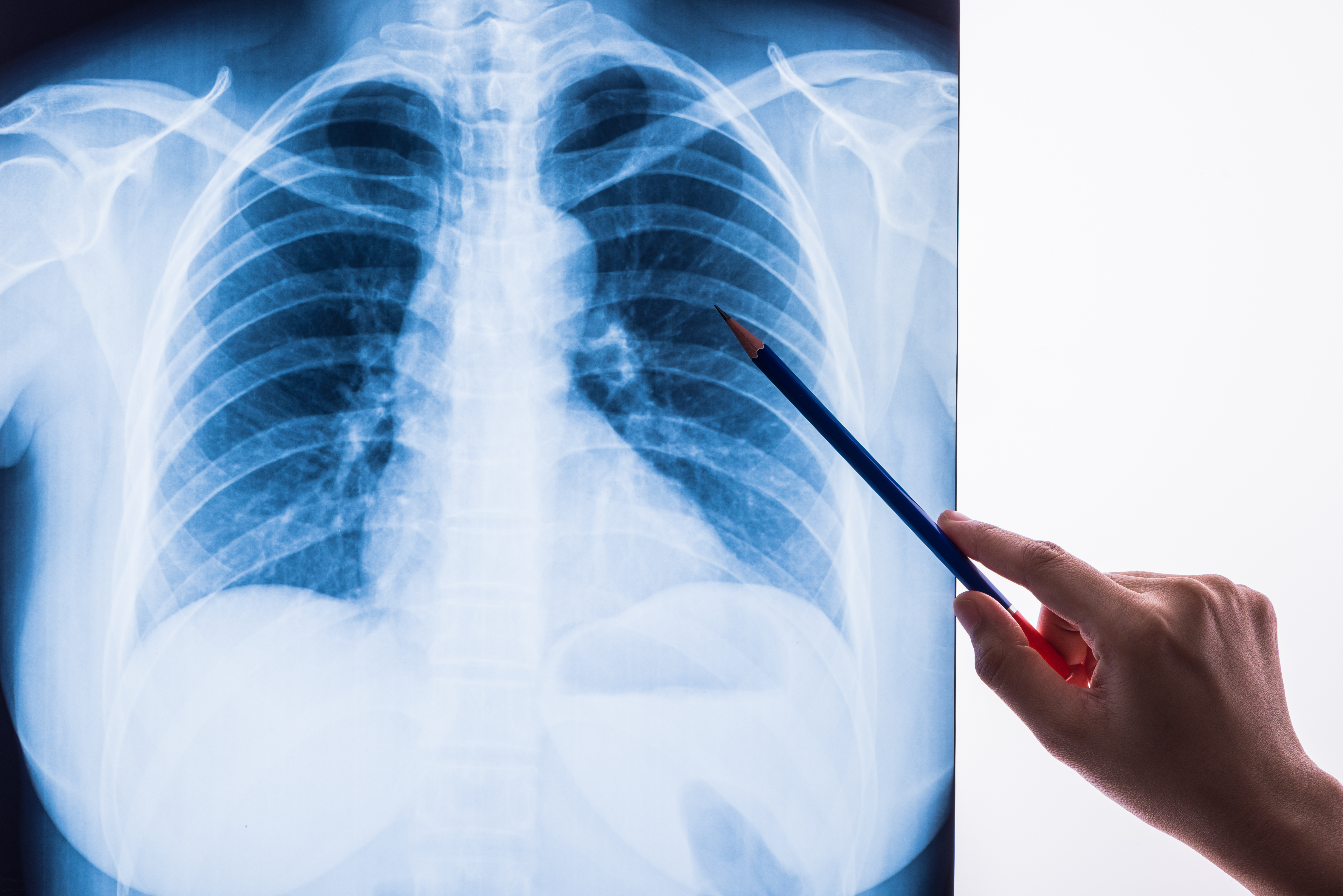
    An X-ray uses ionizing radiation to capture images of the inside of the body. It is fast, affordable, and ideal for viewing bones. However, it’s not as effective for diagnosing soft tissue conditions.

    MRI Scan vs. X-Ray: Key Differences

    FeatureMRI ScanX-Ray
    TechnologyMagnetic fields & radio wavesIonizing radiation
    RadiationNoYes
    Image DetailHigh (best for soft tissues)Moderate (best for bones)
    Use CaseBrain, joints, organs, spinal cordBones, fractures, lungs
    Time Required15–60 minutesFew seconds
    Comfort LevelRequires staying stillQuick and simple
    CostHigherLower

    What an MRI Scan Shows That an X-Ray Does Not

    1. Soft Tissue Injuries

    MRI scans clearly show ligaments, tendons, cartilage, and muscles—details an X-ray cannot capture.

    2. Brain & Spinal Cord

    For detecting brain tumors, stroke, multiple sclerosis, or disc issues in the spine, an MRI scan is far superior.

    3. Joint & Cartilage Damage

    If you’re suffering from knee pain or shoulder injuries, an MRI scan can detect meniscus or rotator cuff tears, unlike an X-ray.

    4. Internal Organs

    MRI scans can detect tumors or inflammation in the liver, kidneys, uterus, and other soft tissues that an X-ray would miss.

    5. Blood Flow and Vessels

    MRI angiography maps blood vessels without dye or radiation, making it a powerful diagnostic tool not available with a standard X-ray.

    MRI Scan vs. X-Ray: Pricing Comparison

    At Ace Imaging Centre

    Service TypeScan TypePrice (INR)
    MRI ScanBrain₹8,000
    Spine₹7,500
    Knee₹6,000
    Shoulder₹6,500
    Full Body₹15,000
    X-RayChest₹500
    Limb₹300
    Spine₹700
    Abdomen₹600

    Note: Prices are indicative and subject to change.

    MRI Scan Benefits

    1. No Radiation Exposure – Safe for repeat use.
    2. Detailed Imaging – Especially useful for soft tissue, nerves, and organs.

    When Should You Choose an MRI Scan Over an X-Ray?

    • Soft tissue injuries (e.g., ligaments, tendons)
    • Brain or spinal issues
    • Chronic joint pain
    • Organ abnormalities
    • Follow-up imaging for unclear X-ray results

    Choose an X-ray when:

    • Bone fractures or dislocations are suspected
    • You need quick and low-cost imaging
    • Lung issues like pneumonia are suspected

    FAQs

    1. What can an MRI scan detect that an X-ray can’t?

    Soft tissue damage, brain disorders, and internal organ issues.

    2. Is an MRI scan safe?

    Yes, it uses no radiation and is non-invasive.

    3. When is an X-ray better?

    For viewing bones, fractures, or chest conditions quickly.

    4. Which is more detailed—MRI scan or X-ray?

    MRI scan offers more detailed images of soft tissues.

    5. Is an MRI scan more expensive than an X-ray?

    Yes. MRI scans are costlier due to advanced technology.

    Conclusion

    While X-rays are fast and effective for bones, MRI scans provide a deeper view of soft tissues, organs, and the brain. Knowing what each scan offers helps you and your doctor choose the best option for your diagnosis. If you need high-quality imaging services, Ace Imaging Centre offers expert support, advanced equipment, and competitive pricing.

    Difference Between CT and MRI Scan

    Difference Between CT and MRI Scan

    Difference Between CT and MRI Scan

    When your doctor suggests a scan to better understand what’s happening inside your body, you’ll likely encounter two major options: CT (Computed Tomography) scans and MRI (Magnetic Resonance Imaging) scans. Both are powerful diagnostic tools used to produce detailed internal images. But they differ significantly in terms of how they work, what they are best suited for, their safety profiles, and cost.

    In this comprehensive guide, we’ll explore the difference between CT scan and MRI, including their uses, advantages, limitations, and the affordable scan pricing offered at Ace Imaging Centre. If you’re wondering about CT scan vs MRI for your condition, this guide will help you understand what suits your needs best.

    Understanding the Basics

    What Is a CT Scan?

    Difference Between CT and MRI Scan

    A CT scan uses X-rays to capture detailed cross-sectional images of the body. Unlike a regular X-ray, a CT scan rotates around your body to take multiple images from different angles. These images are then processed by a computer to create 3D representations of bones, organs, and tissues.

    CT scans are widely used in hospitals and clinics, particularly in emergency settings, because they are fast and efficient.

    Key Features of CT Scans:

    • Uses ionizing radiation (X-rays)
    • Fast (usually 5–10 minutes)
    • Good for visualizing bones, chest, lungs, and abdominal structures
    • Often used in trauma or emergency care

    What Is an MRI Scan?

    An MRI scan uses magnetic fields and radiofrequency pulses to produce detailed images of internal organs and tissues. Instead of X-rays, MRI machines use a strong magnet and radio waves that interact with hydrogen atoms in the body to generate images.

    MRIs take longer to perform but provide superior contrast when examining soft tissues.

    Key Features of MRI Scans:

    • No ionizing radiation
    • Takes 30–60 minutes
    • Provides highly detailed soft tissue images
    • Ideal for brain, spinal cord, joints, and muscles

    How Do CT and MRI Scans Work?

    Understanding the core technology behind these scans helps clarify their ideal applications.

    Technology Behind CT Scans

    CT scans emit X-rays through the body, capturing multiple slices or cross-sections that are assembled into a 3D image. The X-ray beams are absorbed differently by various tissues (bone, fat, fluid), enabling the scan to highlight abnormalities.

    This is especially effective for:

    • Fractures
    • Internal bleeding
    • Tumors
    • Lung diseases
    • Abdominal injuries

    Technology Behind MRI Scans

    MRI scans rely on magnetic fields and radio waves to detect the natural energy emitted by hydrogen atoms in the body. When exposed to magnetic fields, these atoms align and produce signals that are captured and converted into images by the MRI machine.

    MRIs are preferred when doctors need a more detailed look at:

    • Brain and spinal cord
    • Joints and ligaments
    • Tumors in soft tissue
    • Muscles and internal organs

    CT Scan vs MRI: Comparative Overview

    To make the difference between CT scan and MRI clearer, here’s a side-by-side comparison:

    AspectCT ScanMRI Scan
    TechnologyX-raysMagnetic fields + radio waves
    RadiationYes (low dose)No
    Time Required5–10 minutes30–60 minutes
    Best forBones, lungs, trauma, internal bleedingBrain, spine, joints, soft tissues
    Image DetailModerate (excellent for bone & lungs)High (excellent for tissues & nerves)
    CostLowerHigher
    Noise LevelQuietLoud (ear protection provided)
    Safety with ImplantsUsually safeNot suitable for patients with metal implants
    Contrast DyeIodine-based (may cause allergies)Gadolinium-based (safer, but check kidney health)

    If you’re comparing a CT scan vs MRI, this table offers a helpful reference based on technology, safety, application, and cost.

    When to Choose a CT Scan

    CT scans are ideal in situations where speed and accuracy are critical, particularly in emergency or trauma care. Doctors prefer CT scans when they need quick answers to:

    • Detect internal injuries or bleeding
    • Evaluate chest pain or stroke symptoms
    • Diagnose complex bone fractures
    • Assess cancer spread
    • Guide biopsies or surgeries

    Advantages of CT Scans:

    • Fast and widely available
    • Excellent for bone and chest imaging
    • Can capture moving structures (e.g., lungs)

    Limitations:

    • Exposure to radiation
    • Less detail in soft tissues compared to MRI

    When to Choose an MRI Scan

    MRI scans provide excellent detail for soft tissues, nerves, and the brain. They are often used in planned, non-emergency scenarios when physicians need detailed information to diagnose or monitor complex conditions.

    Ideal for Diagnosing:

    • Brain tumors, strokes, or multiple sclerosis
    • Spinal cord injuries and disc herniation
    • Ligament tears and sports injuries
    • Soft tissue tumors or inflammation
    • Pelvic or abdominal organ conditions

    Advantages of MRI Scans:

    • No radiation exposure
    • Highly detailed imaging of soft tissues
    • Safe for repeated use

    Limitations:

    • Longer scan time
    • Claustrophobia or discomfort due to noise
    • Incompatibility with some implants (e.g., pacemakers)

    MRI vs CT Scan Cost in India

    One major consideration for patients is cost. While MRI scans are more expensive due to the complex technology and longer time, both scans remain essential tools in medical diagnostics.

    Affordable Imaging at Ace Imaging Centre

    Scan TypePrice
    MRI Scan₹3,999
    CT Scan (Plain)₹1,500
    CT Chest (Plain)₹2,500
    CT Abdomen (Plain)₹3,500 (Contrast extra)

    Ace Imaging Centre offers competitive rates without compromising on quality. We use state-of-the-art equipment and have experienced radiologists on staff to ensure reliable, fast results. Whether it’s a CT scan vs MRI decision or a general diagnostic need, you’ll find high-quality services at affordable prices here.

    What to Expect During the Scans

    During a CT Scan:

    • You’ll lie on a table that moves through a donut-shaped scanner.
    • The process is painless and quick.
    • You may be asked to hold your breath for a few seconds.

    During an MRI Scan:

    • You’ll lie on a narrow table that slides into a tube-like machine.
    • The scan is noisier, and you’ll be given earplugs or headphones.
    • You must remain still for the best image quality.
    • The experience is painless but may feel long for some.

    Safety and Precautions

    CT Scan Safety:

    • Generally safe for most people.
    • Not recommended for pregnant women due to radiation.
    • Rare allergic reactions to contrast dye.

    MRI Safety:

    • No radiation involved.
    • Safe for most patients unless they have metal implants, pacemakers, or certain tattoos.
    • Gadolinium contrast is usually safe but not recommended for patients with severe kidney disease.

    Always inform your doctor and technician about existing health conditions, implants, allergies, or pregnancy before undergoing any imaging procedure.

    FAQs

    1. Which scan is more detailed—CT or MRI?

    MRI is more detailed for soft tissues, nerves, and the brain. CT is better for bones and chest imaging.

    2. Is an MRI safer than a CT scan?

    Yes. MRI is safer for repeated use as it does not involve radiation. CT scans involve a small dose of radiation.

    3. How long does each scan take?

    CT scans take 5–10 minutes, while MRI scans usually take 30–60 minutes depending on the body part.

    4. Can I get a scan with a metal implant?

    CT scans are generally safe with implants. MRI may not be suitable if you have pacemakers, aneurysm clips, or certain metallic implants.

    5. Do I need to fast before my scan?

    Not always. Fasting is required only for certain contrast-enhanced scans. Your doctor will guide you based on the scan type.

    Why Choose Ace Imaging Centre?

    At Ace Imaging Centre, we are dedicated to providing accurate diagnostics, patient comfort, and affordable care. Our facility is equipped with the latest MRI and CT scan machines, and our team is committed to fast, precise reporting.

    What We Offer:

    • Expert radiologists
    • Same-day reporting
    • Affordable scan packages
    • Patient-friendly environment
    • Online appointment scheduling

    Whether you need a quick CT scan or a detailed MRI scan, our team is here to help you every step of the way.

    Conclusion

    Understanding the difference between CT scan and MRI empowers you to make informed decisions about your health. Both imaging technologies are essential in modern diagnostics, and the best choice depends on your condition and what your doctor needs to evaluate.

    At Ace Imaging Centre, we provide high-quality, affordable diagnostics for all patients. If you’re uncertain about CT scan vs MRI, our experts are ready to assist.

    Book your scan today or call us for more information on how we can support your health journey.

    MRI vs CT scan cost

    MRI vs CT Scan Cost: What You Need to Know Before Your Imaging Test

    When it comes to diagnostic imaging, two of the most commonly recommended tests are MRI (Magnetic Resonance Imaging) and CT (Computed Tomography) scans. While both are used to look inside the body, they differ in technology, use cases, and — most importantly for many patients — cost.

    If you’re trying to decide between these two scans or you’ve been advised by a healthcare provider to get one, understanding the MRI vs CT scan cost differences can help you make an informed choice. This guide breaks it all down — from how the scans work to how much they cost at Ace Imaging Centre.

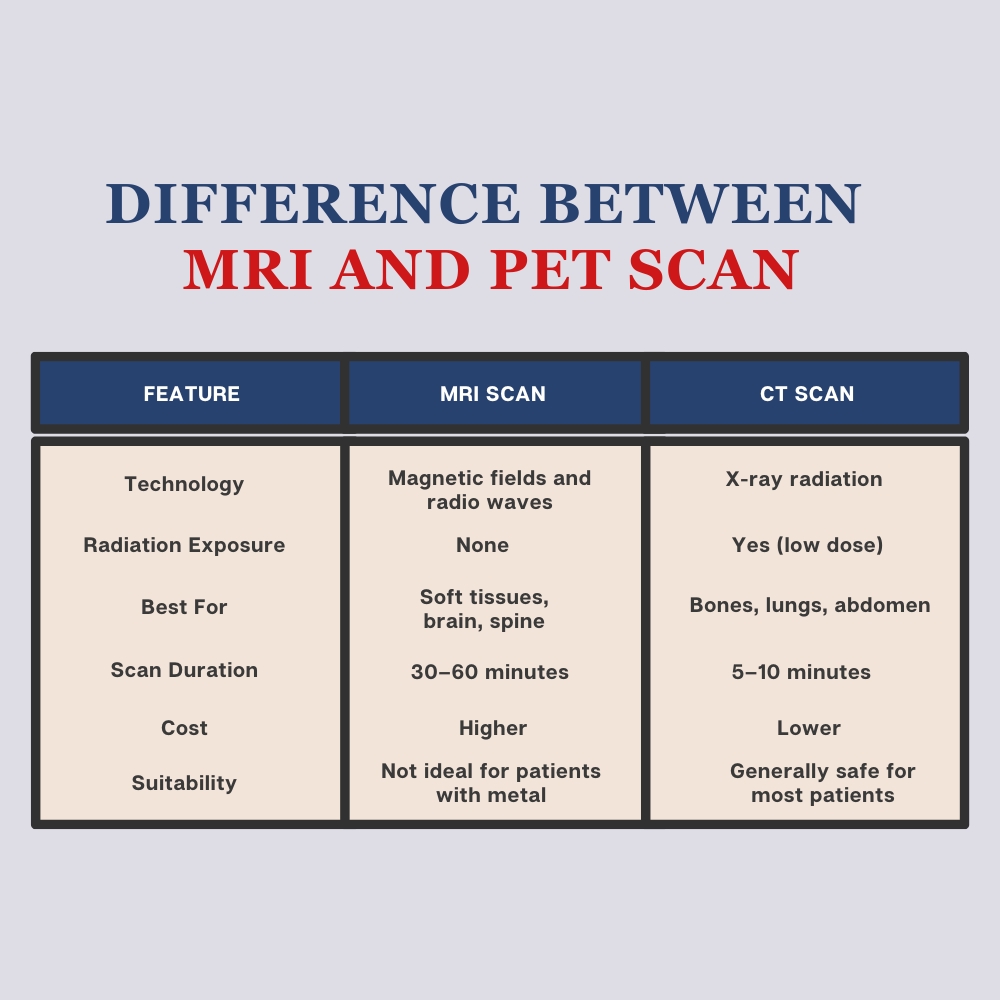
    “Infographic comparing MRI and PET scan with technology, purpose, safety, and medical uses”
    “MRI vs PET Scan: A visual guide to understand key differences in medical imaging”

    What is an MRI Scan?

    An MRI (Magnetic Resonance Imaging) scan uses powerful magnetic fields and radio waves to create detailed images of the organs and tissues in your body. It is a non-invasive and radiation-free procedure ideal for:

    • Brain and spinal cord imaging
    • Soft tissue evaluation (muscles, ligaments, tendons)
    • Joint injuries
    • Tumor detection
    • Internal organ scans (like the liver, kidneys, or uterus)

    Key Features of MRI:

    • No radiation exposure
    • Longer scan times (30–60 minutes)
    • High-resolution images of soft tissues
    • Not suitable for patients with metal implants or pacemakers

    What is a CT Scan?

    A CT (Computed Tomography) scan uses X-ray technology to capture multiple images from different angles, which are then compiled to form cross-sectional views of the body. It’s often the go-to imaging tool in emergency settings.

    CT Scans Are Commonly Used For:

    • Diagnosing bone fractures
    • Detecting internal injuries and bleeding
    • Evaluating lung and chest conditions
    • Identifying tumors or masses
    • Planning surgeries or treatments

    Key Features of CT:

    • Quick scan times (5–10 minutes)
    • Involves low-dose radiation
    • Excellent for imaging bones and chest
    • May involve contrast dyes for better clarity

    MRI vs CT Scan: Key Differences

    FeatureMRI ScanCT Scan
    TechnologyMagnetic fields and radio wavesX-ray radiation
    Radiation ExposureNoneYes (low dose)
    Best ForSoft tissues, brain, spineBones, lungs, abdomen
    Scan Duration30–60 minutes5–10 minutes
    Noise LevelLoud (requires ear protection)Minimal noise
    SuitabilityNot ideal for patients with metalGenerally safe for most patients
    CostHigherLower

    The MRI vs CT scan cost is primarily influenced by the complexity of the imaging process, technology used, and the duration of the scan. MRI is typically more expensive due to the advanced technology and longer scan times.

    MRI vs CT Scan Cost at Ace Imaging Centre

    At Ace Imaging Centre, we believe in transparency and affordability. Below is a breakdown of our current imaging prices:

    💰 Imaging Pricing Table

    Scan TypePrice (INR)
    MRI Scan₹3,999
    CT Scan (Plain)₹1,500
    CT Chest (Plain)₹2,500
    CT Abdomen (Plain)₹3,500 (Contrast extra)

    These prices reflect high-quality diagnostic imaging with the latest technology, performed by expert radiologists. Compared to market averages, Ace Imaging Centre offers competitive rates without compromising on accuracy or patient care.

    Which Scan Should You Choose?

    If your doctor has not specified which scan is required, understanding the purpose behind each can help you discuss your options better.

    Choose MRI if:

    • You need high-resolution images of soft tissues
    • You’re experiencing neurological symptoms (e.g., headaches, seizures)
    • There’s a need to evaluate joint damage or spinal discs

    Choose CT if:

    • You need a fast diagnosis, such as in trauma cases
    • You’re being evaluated for chest or abdominal issues
    • Bone fractures or internal bleeding are suspected

    Still unsure? Our radiology team at Ace Imaging Centre is here to guide you on what’s best for your health condition and budget.

    MRI vs CT Scan Cost: Why the Difference?

    The cost of MRI vs CT scan varies due to several key factors:

    • Equipment Costs: MRI machines are more expensive to operate and maintain.
    • Scan Duration: MRI takes longer, requiring more technician time and scheduling logistics.
    • Image Detail: MRI provides greater clarity for soft tissue structures.
    • Radiation-Free: MRI uses advanced magnetic technology, which increases cost but reduces long-term health risks.

    When weighing MRI vs CT scan cost, always consider the type of information needed for accurate diagnosis. A lower-cost scan might not provide the detail your physician needs, which could lead to repeated or follow-up imaging.

    Frequently Asked Questions

    1. What is the cost of MRI scan?

    At Ace Imaging Centre, the cost of an MRI scan is ₹3,999. This is an all-inclusive rate for a standard MRI scan, providing high-quality imaging with no hidden fees. Our advanced MRI machines ensure optimal clarity and comfort during the procedure.

    2. Is an MRI more expensive than a CT scan?

    Yes, MRI scans are typically more expensive than CT scans. At Ace Imaging Centre:

    • MRI scan costs ₹3,999
    • CT scans start from ₹1,500

    The price difference is due to the advanced technology, longer scan time, and the type of imaging data produced.

    3. Can I choose which scan to take based on cost alone?

    While cost is an important consideration, the choice between MRI and CT should be made based on medical necessity. If you’re unsure, consult your referring doctor or speak to our radiology team for personalized guidance.

    4. Do prices differ for contrast scans?

    Yes. For example, CT Abdomen (Contrast) costs more than the plain scan. Contrast-enhanced scans require additional materials and monitoring, which increase the total cost. Please contact Ace Imaging Centre for a detailed quote if your doctor has recommended a contrast study.

    5. Is prior preparation needed for these scans?

    • MRI: May require fasting, especially for abdominal scans. You’ll need to remove metal objects and inform the technician about implants.
    • CT: Often requires no special preparation unless contrast is involved. Hydration before and after the scan is encouraged if contrast is used.

    Conclusion

    Understanding the MRI vs CT scan cost is essential for patients looking to make informed, budget-conscious healthcare decisions. While MRI scans offer greater detail for soft tissues, they do come at a higher price. CT scans, on the other hand, are quicker and more affordable, making them ideal for many urgent diagnostic needs.

    At Ace Imaging Centre, we offer both MRI and CT services at competitive prices, combining accuracy, safety, and compassionate care. Whether you’re booking your first scan or seeking a second opinion, our expert team is ready to assist.

    📍 Ready to Book Your Scan?

    Visit us at Ace Imaging Centre to schedule your MRI or CT scan today.